Host- and Microbe-Dependent Dietary Lipid Metabolism in the Control of Allergy, Inflammation, and Immunity

Published : April 10th 2019

Athors : Azusa Saika, Takahiro Nagatake and Jun Kunisawa

Abstract

The intestine is the largest immune organ in the body, provides the first line of defense against pathogens, and prevents excessive immune reactions to harmless or beneficial non-self-materials, such as food and intestinal bacteria. Allergic and inflammatory diseases in the intestine occur as a result of dysregulation of immunological homeostasis mediated by intestinal immunity.

Several lines of evidence suggest that gut environmental factors, including nutrition and intestinal bacteria, play important roles in controlling host immune responses and maintaining homeostasis. Among nutritional factors, ω3 and ω6 essential polyunsaturated fatty acids (PUFAs) profoundly influence the host immune system.

Recent advances in lipidomics technology have led to the identification of lipid mediators derived from ω3- and ω6-PUFAs. In particular, lipid metabolites from ω3-PUFAs (e.g., eicosapentaenoic acid and docosahexaenoic acid) have recently been shown to exert anti-allergic and anti-inflammatory responses; these metabolites include resolvins, protectins, and maresins. Furthermore, a new class of anti-allergic and anti-inflammatory lipid metabolites of 17,18-epoxyeicosatetraenoic acid has recently been identified in the control of allergic and inflammatory diseases in the gut and skin.

Although these lipid metabolites were found to be endogenously generated in the host, accumulating evidence indicates that intestinal bacteria also participate in lipid metabolism and thus generate bioactive unique lipid mediators. In this review, we discuss the production machinery of lipid metabolites in the host and intestinal bacteria and the roles of these metabolites in the regulation of host immunity.

Keywords: lipid metabolites, dietary oil, intestinal immunity, inflammation, allergy, intestinal bacteria

Introduction

Lipid composition in organisms differs among species, in accordance with the expression levels of metabolic enzymes and dietary habits. Marine phytoplankton and seaweeds produce a large amount of the ω3-polyunsaturated fatty acids (PUFAs) eicosapentaenoic acid (EPA) and docosahexaenoic acid (DHA) (1). Although fish do not generate EPA and DHA per se, they accumulate EPA and DHA by eating phytoplankton (1). In plants, linseed and perilla contain large amounts of α-linolenic acid, a precursor of EPA and DHA. In contrast, soybean oil and sesame oil contain copious quantities of the ω6-PUFA linoleic acid. The difference in the fatty acid composition of plants depends on the expression levels and activities of metabolic enzymes such as Δ12-desaturase and Δ15-desaturase, which are involved in the generation of linoleic acid and α-linolenic acid, respectively (23). Because mammals do not have either Δ12 or Δ15-desaturase, ω3- and ω6-PUFAs are categorized as essential fatty acids that must be obtained from the diet (3). Therefore, the balance of ω3 and ω6 lipids in the body largely depends on the quality of the dietary lipid consumed.

The beneficial effect of dietary ω3-PUFAs on human health was first reported in an epidemiological study in 1978 in which Greenland Eskimos, who consume high ω3-PUFA diets that include fish, were found to have a lower mortality from coronary heart disease than Danes and Americans, who eat much less ω3-PUFAs (4). Since then, accumulating evidence indicates that EPA and DHA have beneficial effects on the inhibition of various types of inflammatory and allergic diseases, including cardiovascular disease, Alzheimer’s disease, rheumatoid arthritis, inflammatory bowel disease, atopic dermatitis, asthma, and food allergy (513). Recent developments in analytical technology, including liquid chromatography (LC) and mass spectrometry (MS), have enabled us to identify EPA- and DHA-derived pro-resolving lipid mediators (SPMs), including resolvins (Rvs), protectins (PDs), maresins (MaRs), and 17,18-epoxyeicosatetraenoic acid (17,18-EpETE) for inhibition of inflammatory and allergic diseases (714).

Dietary lipids are metabolized not only by mammalian enzymes but also by bacterial enzymes. Microorganisms can generate unique lipid metabolites such as conjugated linoleic acids, hydroxy fatty acids, and oxo fatty acids. These bacteria-produced lipid metabolites show biological activity in the context of host health and diseases (1516). Here, we review our current understanding of ω3- and ω6-PUFA-derived lipid mediators in the control of inflammatory and allergic diseases.Go to:

ω6 Fatty Acid Metabolites Have Opposing Roles in Pro-and Anti-Inflammation

Dietary lipids are metabolized in the body to lipid mediators, which regulate host immune systems. Arachidonic acid (AA) is a metabolite of linoleic acid, and functions as a direct precursor of bioactive lipid mediators, which are known as eicosanoids. In addition to its biosynthesis in the body from linoleic acid, AA can be obtained from dietary sources, such as meat and eggs. AA is metabolized by cyclooxygenase (COX), lipoxygenase (LOX), and cytochrome P450 (CYP), and then converted into lipid mediators, including prostaglandins (PGs), leukotrienes (LTs), thromboxanes (TXs), and lipoxins (LXs) (Figure 1) (17). These AA-derived lipid meditators have both pro- and anti-inflammatory effects in the intestine.

An external file that holds a picture, illustration, etc.
Object name is fnut-06-00036-g0001.jpg

Lipid mediators derived from AA, EPA, and DHA. Various kinds of lipid mediators are produced from ω6- and ω3-PUFAs. AA, EPA, and DHA are converted to bioactive lipid mediators by the enzymatic activities of COX, LOX, and CYP. Lipid mediators exert their biological effects through binding to G-protein-coupled receptors. AA-derived lipid mediators have pro- and anti-inflammatory activities, whereas EPA- and DHA-derived lipid mediators exert anti-inflammatory or pro-resolution activities or both.

AA is converted into LTB4 by LOX activity. The LTB4-BLT1 axis plays a key role in the development of inflammatory diseases including inflammatory bowel disease by stimulating the recruitment of inflammatory cells and the production of pro-inflammatory cytokines (1820). LTB4 also activates another receptor BLT2 which is a high affinity receptor for 12-hydroxy-heptadecatrienoic acid (12-HHT). In contrast to pro-inflammatory role of BLT1, BLT2-deficient mice show transepidermal water loss, suggesting its anti-inflammatory role in the skin (21). Indeed, BLT2-mediated pathway induced the expression of claudin-4 for enhancement of epithelial barrier (21).

AA is converted into PGs by COX activity, which generate PGD2 and PGE2 as the representative lipid mediators. The PGD2-chemoattractant receptor-homologous molecule expressed on Th2 cells (CRTH2) pathway induces dextran sodium sulfate (DSS)- and trinitrobenzene sulfonic acid (TNBS)-induced colitis (2223). Eosinophil infiltration into colon is inhibited by CRTH2 antagonist treatment in TNBS-induced colitis (23). In contrast to pro-inflammatory properties, the PGD2-DP axis reduces granulocyte infiltration into the colonic mucosa in the mouse model of TNBS-induced colitis and colitis-associated colorectal cancer (2425) These opposing roles of CRTH2 and DP in chemotaxis are explained by different usage of G proteins. CRTH2 is coupled with Gαi while DP is coupled with Gαs, which induces decreased and increased in cAMP levels, respectively (26). Consistent with these findings when PGD2 acted on neutrophils CRTH2 pathway, it induced neutrophil migration to the intestinal lamina propria in the DSS-induced colitis model (22).

PGE2 stimulates four distinct types of receptors EP1 to EP4. The PGE2-EP2 axis in neutrophils and tumor-associated fibroblasts promotes colon tumorigenesis by inducing expression of inflammation- and growth-related genes, including tumor necrosis factor (TNF)-α, interleukin (IL)-6, and Wnt5A (27). In contrast to EP2-mediated carcinogenic effects, EP3-mediated signals show anti-carcinogenic effects, which are consistent with different types of G protein pathways; EP2 activates Gαs, while EP3 activates Gαi (27).

Therefore, it is suggested that the opposing roles in pro- and anti-inflammation of ω6-PUFAs derived lipid mediators are determined by target cell types and receptor types.

In addition to these factors, cellular source of PGD2 affects in its activity in pro- and anti-inflammation in croton oil-induced skin inflammation model (28). In the initial phase of the dermatitis when few inflammatory cells exist in the skin, endothelial cells show highest COX-2 activity and produce PGD2, which leads to DP activation on endothelial cells, and inhibits vascular leakage. On the other hand, in the late phase of the dermatitis, many types of hematopoietic inflammatory cells produce PGD2, which stimulate CRTH2 on inflammatory cells for infiltration to the inflamed skin, and exacerbates skin inflammation (2829). These findings suggest that stage of inflammatory process is a determinant of the effects of AA-derived metabolites through distinct site of the mediator production.

Dietary ω3-PUFAs Inhibit the Development of Allergic Disease

We and others have shown the anti-inflammatory and anti-allergic effects of dietary ω3-PUFAs (47812133034).

Fish oil is a representative ω3-PUFA-rich dietary oil which contains plenty amount of EPA and DHA. Dietary fish oil ameliorated asthma by decreasing eosinophil infiltration, mucus production, and peribronchiolar fibrosis, which was associated with inhibition of cytokine production by downregulation of nuclear factor (NF)-κB and GATA-3 (30). These anti-allergic effects may be caused by decreased amount of ω6-PUFA-derived lipid mediators such as PGD2, LTB4, and LTE4 which exacerbate airway inflammation and increasing ω3-PUFA-derived lipid mediators, for example, RvD1 is reported to decrease allergic airway responses (63536). Further, fish oil-fed mice reduced acute allergic skin response in food allergy model sensitized by peanut and whey by reducing mucosal mast cell protease-1 and antigen specific IgE in serum (31).

Linseed oil contains large amount of α-linolenic acid, which is converted into EPA and DHA in the body. One study reported that linseed oil-fed mice alleviated pollen-induced allergic conjunctivitis by decreasing the production of ω6-PUFA-derived pro-inflammatory lipid mediators, and reducing eosinophil infiltration into the conjunctiva (13). We also found that linseed oil-fed mice reduced allergic diarrhea in ovalbumin (OVA)-induced food allergy model (7). In this model, allergic diarrhea occurs as a consequence of a dominant Th2-type environment and the presence of allergen-specific serum IgE, which induces mast cell degranulation in the gut. We found that in linseed oil-fed mice, the Th1–Th2 balance, allergen-specific IgE level, and mast cell numbers in the gut did not change compared with those in soybean oil-fed mice in the OVA-induced food allergy model. However, we found that mast cell degranulation was profoundly inhibited in linseed oil-fed mice (7).

We also assessed fatty acid composition in intestinal tissues and found that the amounts of α-linolenic acid and its metabolites of EPA and DHA were increased in linseed oil-fed mice when compared with those in soybean oil-fed mice (7). In contrast, linoleic acid and AA levels were higher in soybean oil-fed mice than linseed oil-fed mice (7). Imaging MS analysis revealed that increased amounts of α-linolenic acid, EPA and DHA were found in the lamina propria compartment where large numbers of immune cells such as T cells, plasma cells, and dendritic cells are present (7). These findings collectively demonstrated that the composition of essential fatty acids in dietary oils directly reflect the lipid composition in the gut, which, in turn, may influence the host immune system.

ω3 Fatty Acid Metabolites Have Roles in Anti-Inflammation and Pro-Resolution

EPA and DHA are representative ω3-PUFAs, which compete with AA in the AA cascade. Therefore, it has long been considered that the beneficial effects of dietary ω3-PUFAs against inflammatory diseases stem from decreased amounts of AA-derived eicosanoids. In addition, recent technology developments in LC and MS have led to the identification of trace and novel lipid mediators, including Rvs, PDs, and MaRs, which are produced from EPA and DHA in the body (37). These metabolites have anti-inflammatory or pro-resolution properties (or both) and are known as SPMs (Figure 1) (37). Although the receptors for SPMs have not been fully elucidated, some SPMs have been shown to interact with specific receptors. For example, Rvs derived from EPA and DHA use distinct types of receptors. RvE1 interacts with BLT1 and ChemR23, while RvD1 interacts with G-protein-coupled receptor (GPR) 32 and ALX (3839).

Examples of how SPMs affect intestinal inflammation include their involvement in the RvE1–ChemR23 axis, which actively inhibits colonic inflammation in the DSS-induced colitis model by suppressing the TNF-α-induced nuclear translocation of NF-κB and the expression of inflammatory cytokines, including TNF-α and IL-12p40, from macrophages (40). Furthermore, RvE1 and PD1 enhance the resolution of inflammation by stimulating macrophage phagocytosis of apoptotic cells in zymosan-induced peritonitis (4142). MaR1 is reported to attenuate both DSS- and TNBS-induced colitis by inhibiting NF-κB activation and inflammatory cytokine production (43). Thus, multiple types of SPMs exert their anti-inflammatory properties by using different mechanisms for the regulation of colitis.

17,18-Epoxyeicosatetraenoic Acid is a New Class of Anti-Allergy Lipid Mediator

As mentioned above, dietary linseed oil inhibited the development of food allergy with increased amounts of α-linolenic acid, EPA and DHA in the intestine (7), which prompted us to investigate mediator profiles by using LC-MS/MS analysis. We found that 17,18-EpETE was the metabolite whose levels increased the most in the gut of linseed oil-fed mice (7). When 17,18-EpETE was intraperitoneally injected into soybean oil-fed mice, development of allergic diarrhea and degranulation of mast cells were inhibited, which was similar to observation in linseed oil-fed mice (Figure 2) (7). Consistent with its action at the late stage of the allergic response, 17,18-EpETE was effective as a prophylactic and a therapeutic treatment for food allergy (7).

An external file that holds a picture, illustration, etc.
Object name is fnut-06-00036-g0002.jpg


Figure 2

17,18-EpETE is a new class of anti-allergy and anti-inflammatory lipid mediator. 17,18-EpETE is produced by CYP from EPA. 17,18-EpETE suppresses contact hypersensitivity by reducing neutrophil infiltration into the skin by inhibiting Rac activation and migration through GPR40 signaling. 17,18-EpETE also indirectly inhibits the development of food allergy by inhibiting mast cell degranulation. Given that mast cells do not express GPR40, the detailed mechanisms responsible for this inhibition of mast cell degranulation remain unclear.

17,18-EpETE Ameliorates Contact Hypersensitivity Through GPR40-Mediated Inhibition of Neutrophil Migration

To evaluate the biological role of 17,18-EpETE in the regulation of other types of allergic inflammatory disease, we examined the effect of 17,18-EpETE on the regulation of contact hypersensitivity (CHS) in the hapten-induced CHS model. We found that 17,18-EpETE showed both prophylactic and therapeutic anti-inflammatory effects on CHS in mice and cynomolgus macaques (44). 17,18-EpETE did not affect T cell or dendritic cell functions, including inducible skin-associated lymphoid tissue formation, but it did selectively inhibit neutrophil infiltration into the skin (44). Indeed, 17,18-EpETE reduced neutrophil mobility by inhibiting Rac-activation and pseudopod formation in a GPR40-dependent fashion (44).

Consistent with this selective influence on neutrophils, GPR40 was highly expressed by neutrophils, but not T cells or other leukocytes in the skin. It is worth noting that mast cells do not express GPR40; so, given that mast cell degranulation was inhibited by 17,18-EpETE treatment in the food allergy model (744), this finding suggests that 17,18-EpETE inhibits mast cell degranulation indirectly (Figure 2). Of note, the activation of GPR40 in intestinal epithelial cells has been reported to improve intestinal barrier function by enhancing occludin expression (45). Therefore, it is likely that the improvement in intestinal barrier function induced by 17,18-EpETE via GPR40 in epithelial cells led to decreased allergen penetration, which, in turn, resulted in decreased mast cell degranulation and inhibited food allergy development.

Structure-Activity Relationships Among the GPR40-Dependent Anti-Allergic and Anti-Inflammation Effects of 17,18-EpETE

17,18-EpETE is further metabolized by soluble epoxide hydrolase to 17,18-dihydroxy-eicosatetraenoic acid (17,18-diHETE). However, 17,18-diHETE has little effect on the development of food allergy, and 14,15-epoxyeicosatetraenoic acid (14,15-EpETE), which has an epoxy structure at the ω6 position, also lacks the ability to inhibit food allergy (7). In addition, 17,18-diHETE has little effect on the development of CHS (44). Although 17,18-EpETE activates GPR40, 17,18-diHETE does not activate GPR40, which is consistent with its lack of anti-allergic and anti-inflammatory properties (744). These findings therefore suggest that the 17,18-epoxy ring structure at the ω3 position in EPA is important for GPR40-mediated anti-allergic and anti-inflammatory activity.

17,18-EpETE is synthesized from EPA through the enzymatic activity of CYP and has two isomers, 17(S),18(R)-EpETE and 17(R),18(S)-EpETE. Among the CYP subfamilies in mice, five CYP isoforms (Cyp1a2, 2c50, 4a12a, 4a12b, and 4f18) are known to convert EPA into 17,18-EpETE (46). Cyp1a2 displays high stereoselectivity for producing 17(R),18(S)-EpETE, whereas Cyp4f18 displays stereoselectivity for producing 17(S),18(R)-EpETE (46). In contrast, Cyp2c50, Cyp4a12a, and Cyp4a12b display less stereoselectivity and produce a mixture of 17(S),18(R)-EpETE and 17(R),18(S)-EpETE (46). 17(R),18(S)-EpETE, but not 17(S),18(R)-EpETE, is a potent vasodilator (47). Indeed, 17(R),18(S)-EpETE activates calcium-activated potassium channels, which lead to relaxation of rat cerebral artery vascular smooth muscle cells (47). Whether stereoselectivity of 17,18-EpETE contributes to the anti-allergy and anti-inflammatory effects of 17,18-EpETE have not been evaluated in food allergy and CHS, because we used racemic compounds in our studies (744). The CYP isoform and polymorphisms determine the metabolic properties of CYP and stereoselectivity. Therefore, the anti-allergic and anti-inflammatory health benefits derived from ω3-PUFA intake may be influenced by the expression levels of the various types of CYP in the body.

CYP is also found in microorganisms. For example, it has been reported that bacterial CYP (e.g., BM-3 derived from Bacillus megateirum) metabolizes PUFAs and produces hydroxy and epoxy fatty acids (48). Bacillus, Streptomyces, Pseudomonas, and Mycobacterium also have CYP (4953). These findings suggest that many types of microorganisms are involved in lipid metabolism. In addition, other metabolic enzymes, such as COX and LOX, are thought to be expressed by some bacteria, including Pseudomonas aeruginosa, Shewanella woodyi, Mytococcus fulrus, and Burkholderia thailandensis (5455). Some microorganisms described above are present in environment, suggesting that in addition to mammalian expression of metabolic enzymes, various microorganisms may be a determinant of the efficacy of ω3-PUFA in the context of the regulation of inflammation.

Bacterial-Conjugated Linoleic Acid has a Role in Anti-Inflammation

Intestinal bacteria have been shown to express unique unsaturated fatty acid-metabolic enzymes and to produce bioactive lipid mediators that are not generated by mammalian cells (Figure 3). Ruminal bacteria including Butyrivibrio, Lactobacillus, and Megasphaera can produce conjugated linoleic acid (CLA), which is an isomer of linoleic acid that has conjugated double bounds (5658). It is known that CLA has some isomers such as cis-9-trans-11-octadecenoic acid (c9,t11-CLA), trans-10-cis-12-octadecenoic acid (t10,c12-CLA) and trans-9-trans-11-octadecenoic acid (t9,t11-CLA). These isomers have different activities for insulin sensitivity and atherosclerosis.

An external file that holds a picture, illustration, etc.
Object name is fnut-06-00036-g0003.jpg

Figure 3

Physiological functions of CLA and HYA. CLA and HYA are produced from linoleic acid by intestinal bacteria. c9,t11-CLA ameliorates insulin sensitivity and prevents atherosclerosist10,c12-CLA deteriorates insulin sensitivity and promotes atherosclerosis, and t9,t11-CLA prevents atherosclerosis. HYA enhances intestinal barrier function by increasing occludin expression and inhibiting intestinal inflammation in a GPR40-dependent manner. HYA inhibits atopic dermatitis by increasing claudin-1 expression and enhancing skin barrier function. HYA also inhibits gastric Helicobacter infections by blocking the bacterial futalosine pathways.

For example, c9,t11-CLA shows beneficial effects on insulin sensitivity by enhancing glucose uptake and adipokine production such as leptin and adiponectin, and on atherosclerosis by suppressing macrophage infiltration and activation, and reducing plaque development through an increase in expression of PPARγ, while t10,c12-CLA shows adverse effects through a decrease in expression of PPARγ (5963). In addition, t10,c12-CLA reduces expression of liver X receptor α (LXRα) which induces expression of ATP-binding cassette (ABC) transporter A1, ABCG1, and sterol regulatory element binding protein 1c which involved in reverse cholesterol transport (6465). Therefore, t10,c12-CLA shows pro-atherosclerosis effects (6668). On the other hand, t9,t11-CLA is effective for the treatment of atherosclerosis by activation of LXRα (69). These results indicate that each isomers exert different bioactivities through distinct transcriptional regulation and activation of PPARγ and LXRα for the control of insulin sensitivity and atherosclerosis.

Compared with chemical production, microbial fermentation offers better ways to produce isomer-specific CLAs. The CLA isomers are produced at different ratios, depending on the type of bacteria. Lactobacillusstrains (L. acidophilus, L. plantarum, L. casei, L. reuteri, L. rhamnosus, and L. pentosus), Bifidobacteriumstrains (B. dentium, B. breve, and B. lactis), and Propionibacterium freudenreichii can convert linoleic acid to c9,t11-CLA and t10,c12-CLA, and these bacteria produce higher levels of c9,t11-CLA than of t10,c12-CLA (15577072). Some Lactobacillus and Bifidobacterium strains also produce t9,t11-CLA with c9,t11-CLA and/or t10,c12-CLA (57). L. paracasei and B. bifidum produce c9,t11-CLA stereoselectively, whereas Megasphaera eldsenii produces t10,c12-CLA stereoselectively (7173). Given that these CLAs have different biological activities which depend on their 3D-structure, it is important to select appropriate bacteria as a probiotics or producer for obtaining required beneficial effects.

Bacterial Production of Unique Hydroxy and Oxo Fatty Acids and Their Multiple Biological Activities

L. plantarum, an intestinal bacteria, produces hydroxy fatty acids (i.e., 10-hydroxy-cis-12-octadecenoic acid [HYA], 10-hydroxy-trans-11-octadecenoic acid [HYC], 10-hydroxy-octadecanoic acid [HYB]) and oxo fatty acids (10-oxo-cis-12-octadecenoic acid [KetoA], 10-oxo-trans-11-octadecenoic acid [KetoC], 10-oxo-octadecanoic acid [KetoB]) as intermediate products of CLA production (16). Recently, these metabolic intermediates have been shown to contribute to the regulation of host health and diseases. HYA is the first metabolite produced from linoleic acid by L. plantarum, and it enhances intestinal barrier function and suppresses the development of DSS-induced colitis in mice in a GPR40-dependent manner (45). Furthermore, HYA prevents Helicobacter infections by blocking their futalosine pathways, which is an alternative menaquinone biosynthetic pathway and an essential metabolic pathway for the growth of Helicobacter. Moreover, HYA treatment suppresses the formation of lymphoid follicles in the gastric mucus layer after H. suis infection, and therefore HYA treatment protects mice against the formation of gastric mucosa-associated lymphoid tissue lymphoma induced by infection with Helicobacter (74). HYA also ameliorates the pathological scores of atopic dermatitis in NC/Nga mice by decreasing plasma IgE levels and reducing mast cell infiltration into the skin (7576). KetoA enhances adiponectin production and glucose uptake in a proliferator-activated receptor γ (PPARγ)-dependent manner, and is effective for the prevention and amelioration of metabolic abnormalities associated with obesity (77).

The production of these hydroxy and oxo fatty acids depends on the unique bacterial enzymes CLA-HY (unsaturated fatty acid hydratase), CLA-DH (hydroxy fatty acid dehydrogenase), CLA-DC (isomerase), and CLA-ER (enone reductase) in L. plantarum AKU1009a (1678). The hydroxy activity is found not only in Lactobacillus but also in a broad spectrum of bacteria. Oleate hydratase belongs to the FAD-dependent myosin cross-reactive antigen (MCRA) protein family, which is found in gram-positive and -negative bacteria; it catalyzes the conversion of linoleic acid to HYA. For example, Lactobacillus, Bifidobacterium, Streptococcus, and Stenotrophomonas bacteria are reported to have MCRA, and indeed they have the ability to produce HYA (7982).

Together, these findings indicate that intestinal bacteria metabolize dietary lipids and produce lipid metabolites that can regulate host immune systems. Therefore, to obtain beneficial lipid metabolites and regulate intestinal inflammation, we need to consider not only host enzymes but also enzymes produced by intestinal bacteria. In addition, we must consider how dietary lipid intake causes changes in the intestinal microbiota.

Conclusion

Recent technological developments in lipidomics research initiated a new era of lipid biology by helping researchers to identify novel lipid metabolites from ω3- and ω6-PUFAs, which actively regulate the host immune system and play important roles in the control of health and diseases. Given that the production of lipid metabolites is influenced by complex factors, including diet, intestinal bacteria, and enzyme expression, combined studies on nutrition, metabolomics, and the metagenomics of the microbiota, as well as informatics, may provide powerful insights to further our understanding of the lipid network in the host immune system.

Author Contributions

All authors listed have made a substantial, direct and intellectual contribution to the work, and approved it for publication.

Conflict of Interest Statement

The authors declare that the research was conducted in the absence of any commercial or financial relationships that could be construed as a potential conflict of interest.

Acknowledgments

We thank laboratory members for helpful discussion. The results described in the review were obtained, at least in part, from research supported by grants from the Ministry of Education, Culture, Sports, Science, and Technology of Japan (MEXT) and the Japan Society for the Promotion of Science (JSPS; KAKENHI [JP15K19142 to TN; JP15H05790, JP18H02150, JP18H02674, JP17K09604, JP26670241, and JP26293111 to JK]); the Japan Agency for Medical Research and Development (AMED; [JP17ek0410032s0102, JP17ek0210078h0002, JP17ak0101068h0001, JP17gm1010006s0101, JP18ck0106243h0003, and 19ek0410062h0001 to JK]); the Ministry of Health and Welfare of Japan (to JK); the Science and Technology Research Promotion Program for Agriculture, Forestry, Fisheries, and Food Industry (to JK); grants-in-aid for Scientific Research on Innovative Areas from MEXT (JP23116506, JP16H01373, and JP25116706 to JK); Cross-ministerial Strategic Innovation Promotion Program (SIP); the Ono Medical Research Foundation; and the Canon Foundation (to JK).

Glossary

Abbreviations

12-HHT12-hydroxy-heptadecatrienoic acid
14,15-EpETE14,15-epoxyeicosatetraenoic acid
17,18-EpETE17,18-epoxyeicosatetraenoic acid
17,18-diHETE17,18-dihydroxy-eicosatetraenoic acid
AAarachidonic acid
CHScontact hypersensitivity
CLAconjugated linoleic acid
COXcyclooxygenase
CRTH2chemoattractant receptor-homologous molecule expressed on Th2 cells
CYPcytochrome P450
DCdendritic cell
DHAdocosahexaenoic acid
DSSdextran sodium sulfate
EPAeicosapentaenoic acid
GPRG-protein-coupled receptor
HYA10-hydroxy-cis-12-octadecenoic acid
HYB10-hydroxy-octadecanoic acid
HYC10-hydroxy-trans-11-octadecenoic acid
ILinterleukin
KetoA10-oxo-cis-12-octadecenoic acid
KetoB10-oxo-octadecanoic acid
KetoC10-oxo-trans-11-octadecenoic acid
LCliquid chromatography
LOXlipoxygenase
LTleukotriene
MaRmaresin
MCRAmyosin cross-reactive antigen
MSmass spectrometry
NFnuclear factor
OVAovalbumin
PDprotectin
PGprostaglandin
PPARperoxisome proliferator-activated receptor
PUFApolyunsaturated fatty acid
Rvresolvin
SPMspecialized pro-resolving lipid mediator
TNFtumor necrosis factor
TXthromboxane.

Full Article (including references) :
https://www.frontiersin.org/articles/10.3389/fnut.2019.00036/full

https://www.ncbi.nlm.nih.gov/pmc/articles/PMC6468274/

Bold sections applied by ChooseLife.
Infection and pH

Meridian Institute News Vol. 7 No. 3 May, 2003

pH-Dependent Viruses

   For over five years researchers at Meridian Institute have been looking into the connection between pH (acid/alkaline) balance and viral infection – a link noted by Edgar Cayce in several of his psychic readings. With the recent epidemic of severe acute respiratory syndrome (SARS) and continued concerns about common conditions such as colds and flu, our interest in this field has expanded to explore basic science and clinical projects to test the Cayce hypothesis.  Here is an overview of what we have found so far and where we are headed.  Some simple preventive measures will also be discussed. 


Understanding Viruses


    Viruses are extremely small parasitic life forms, the smallest living things on Earth. In essence, a virus is a minuscule pocket of protein that contains genetic material.

    Although viruses can remain dormant outside a living body, they only become active when in contact with live tissue. Once a virus infects a cell by penetrating the cell membrane, it can either lay dormant (lysogenic infection) or begin reproducing itself (lytic infection – the more common pattern).  When a cell becomes full of virus, it bursts releasing the virus to infect other host cells.

    A wide variety of diseases are caused by viruses including the common cold, flu, warts, measles, hepatitis, herpes, smallpox, and AIDS.  SARS is just the latest in a long list of viral parasites.

    Unlike bacteria that can usually be effectively treated with antibiotics, viral infections are often unresponsive to modern medical treatment.  If the virus causing a disease has been discovered, a serum may be developed to provide inoculation against that specific virus.  The most common approach to virus protection is to avoid contamination by infected individuals. 
 Viral pH Dependency

    Laboratory experiments (in vitro) have confirmed that many viruses require a mildly acidic environment to attack host cells.  At Meridian Institute we are interested in determining exactly how this physiological fact manifests within the human body (in vivo). Understanding the role of pH balance in viral infections may provide preventive and therapeutic breakthroughs for dealing with epidemics including the recent outbreak of SARS.

    To appreciate the relevance of pH for viral infection, let’s first review some facts about acid/alkaline balance.  The acid/alkaline continuum ranges from 0-14 with 7 as neutral. The lower end of the scale (below 7) is acid and above 7 is alkaline.

    Acid/alkaline balance is extremely important to normal physiology. For example, the blood will maintain a slightly alkaline range of 7.35 to 7.45. Extended pH imbalances of any kind are not well tolerated by the body. The management of the pH factor is so important that the body’s primary regulatory systems (especially breathing, circulation, and eliminations) closely regulate acid-alkaline balance in every cell and system.

    Certain viruses (including the rhinoviruses and coronaviruses that are most often responsible for the common cold and influenza viruses that produce flu) infect host cells by fusion with cellular membranes at low pH.  Thus they are classified as “pH-dependent viruses.”

    Drugs that increase intracellular pH (alkalinity within the cell) have been shown to decrease infectivity of pH-dependent viruses.  Since such drugs can provoke negative side effects, the obvious question is whether more natural techniques can produce the same result. 
 Possible Relevance to SARS
    The World Health Organization has concluded that SARS is produced by a new virulent strain of coronavirus. Specific research on the possible pH dependency of the SARS virus has not yet been done.  It is well known that coronavirus infectivity is exquisitely sensitive to pH.  For example, the MHV-A59 strain of coronavirus is quite stable at pH 6.0 (acidic) but becomes rapidly and irreversibly inactivated by brief treatment at pH 8.0 (alkaline).  Human coronavirus strain 229E is maximally infective at pH 6.0.  Infection of cells by murine coronavirus A59 at pH 6.0 (acidic) rather than pH 7.0 (neutral) yields a tenfold increase in the infectivity of the virus.

    If the strain of coronavirus responsible for SARS shares the pH characteristics of these other coronaviruses that are pH-dependent, this could be a valuable clue to effective prevention and treatment strategies for this frightening epidemic. Perhaps keeping a balanced or slightly alkaline pH environment for the body’s tissues can provide viral protection or enhanced healing for SARS and common viral agents that cause respiratory infections. 
 Edgar Cayce’s Recommendations
    Edgar Cayce affirmed the importance of pH balance with regard to common viruses that cause colds and flu.  Cayce repeatedly insisted that such infectious agents do not thrive in an alkaline environment. When asked how to prevent colds, Cayce replied, “by keeping the body alkaline. Only in acids do colds attack the body.” (3248-1)

    Cayce recommended using litmus paper to test the pH of urine and saliva as an indication of the pH balance of the body.  We now have more precise means for monitoring pH in the form of pH paper and digital pH meters.

    As a practical preventive measure, Cayce’s suggestions for alkalizing the body emphasized eating an abundance of fresh fruits and vegetables, especially salads:   “…  if an alkalinity is maintained in the system – especially with lettuce, carrots and celery, these in the blood supply will maintain such a condition as to immunize a person.”  (480-19)  Consuming citrus fruit and juices was also a common alkalizing suggestion in the readings that addressed concerns about cold and flu infections. 
 Meridian Institute Research
    We reported a preliminary study on dietary effects of urine pH in January 1999 (Vol 3 No 1). The study was done to test Edgar Cayce’s recommendations for testing urine as a marker for systemic pH balance.  Our conclusion was that following Cayce dietary recommendations of eating primarily alkaline-producing foods (such as fruits and vegetables) does indeed tend to alkalize the urine.

    We have contacted leading researchers in the field of rhinovirus infection studies to make them aware of the possible role of acid/alkaline balance and seek feedback on how to do scientific studies to test the Cayce hypothesis in vivo – with human subjects.  If it turns out that SARS is produced by a pH-dependent coronavirus, we will certainly make sure that the clinical researchers who do in vivo studies of viral infections are made aware of this potentially important factor.

    Rhinovirus infection studies are done at several leading universities, usually to test the effectiveness of drugs that may help to prevent or relieve the symptoms of colds.  Small amounts of solution containing rhinovirus are dropped into the noses of subjects to intentionally infect them under controlled conditions.  Interestingly, about five to fifteen percent of subjects do not get colds even when the virus is carefully placed onto the nasal mucosa.  Could it be that the pH of the resistant subject’s nasal mucosa is alkaline (or neutral), preventing the rhinovirus from infecting the cells inside of the nose?

    There have been several published studies on nasal mucosal pH with varying results.  Some researchers have concluded that the pH of nasal secretions vary with sleep, rest, ingestion of food, emotional states, and menstrual cycles.  Other scientists, using different technology, have failed to confirm these results.  Clearly much work needs to be done in this area to establish consistent outcomes.

    We have tested equipment from two of the leading companies that sell devices that can measure nasal pH and have learned that there is significant variability in the instruments, apart from the complexities of measuring pH in different people and within the same person over time.

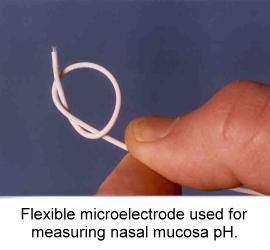
    The picture on page 1 shows a pH sensitive microelectrode that we are currently using to measure nasal mucosa pH.  The device was developed for insertion through the nose and down into the esophagus in acid reflux patients.  Since the system is already FDA approved for measuring pH in humans by insertion via the nasal cavity, it is ideally suited for our purposes.  This particular model seems to be more sensitive and accurate than one we tested from another leading supplier of this type of instrument.

    So far we have done a series of nasal mucosa pH measurements on two individuals.  One of the notable outcomes from our preliminary efforts in this area is that psychological stress can have profound effects on nasal mucosa pH, causing a major drop (acidification) in pH. We will be doing more work with nasal mucosal pH with additional subjects to determine the possible relevance of this measure with regard to upper respiratory viral infection.  We are also hoping to be able to do a collaborative study with established researchers who regularly conduct in vivo studies involving intentional infection with rhinovirus (the “common cold”) to explore the possible connection between life-style factors (such as diet) and the infectivity of pH-dependent viruses. 
 

Source : https://www.meridianinstitute.com/newslet/Vol7-3/7-3.html

Infection and pH

This is the first in a series of essays, or articles, related to terrain (pH chiefly). Areas of chief interest in Bold.

Viral Infections are pH Sensitive

Published on September 1, 2014
Author: Dr Sirius

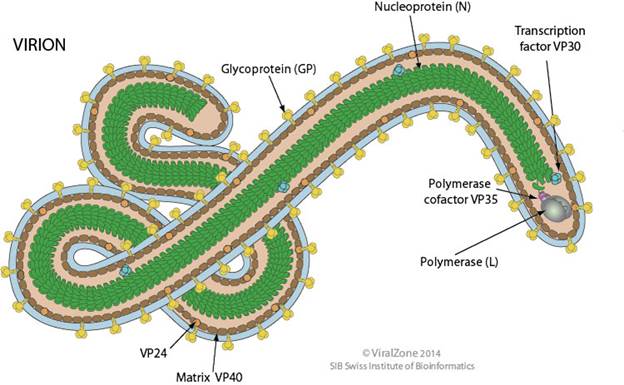
http://education.expasy.org/images/Filovirus_virion.jpg


Filamentous 790 nm long for Marburg virus and 970 nm long for Ebola virus. Diameter is about 80nm.

According to doctors at the Broad Institute of MIT and Harvard University Ebola is becoming harder to treat because rapid mutation could “render treatment and vaccines ineffective.” American scientists indicate that the initial patients diagnosed with the virus in Sierra Leone revealed more than 300 genetic modifications.

Traditional approaches to Ebola are being outclassed by the virus so we have to turn to more fundamental approaches that will stop the virus no matter what its gene sequence mutates to. Blasting Ebola with waves of alkalinity will work because many if not most viruses require a mildly acidic environment to infect the cell. They require mild acidity for maximum infectivity.

Viruses are extremely small parasitic life forms, the smallest living things on Earth. In essence, a virus is a minuscule pocket of protein that contains genetic material. Although viruses can remain dormant outside a living body, they only become active when in contact with live tissue. Once a virus infects a cell by penetrating the cell membrane, it can either lay dormant (lysogenic infection) or begin reproducing itself (lytic infection – the more common pattern). When a cell becomes full of virus, it bursts, releasing the virus to infect other host cells.

Certain viruses (including the rhinoviruses and coronaviruses that are most often responsible for the common cold and influenza viruses that produce flu) infect host cells by fusion with cellular membranes at low pH. Thus they are classified as “pH-dependent viruses.”

Fusion of viral and cellular membranes is pH dependent. “The plasma membrane of eukaryotic cells serves as a barrier against invading parasites and viruses. To infect a cell, viruses must be capable of transporting their genome and accessory proteins into the host cell, bypassing or modifying the barrier properties imposed by the plasma membrane. Entry into the host cells always involves a step of membrane fusion for enveloped animal viruses. Other enveloped viruses such as orthomyxoviruses, alphaviruses or rhabdoviruses enter the cells by the endocytic pathway, and fusion depends on the acidification of the endosomal compartment. Fusion at the endosome level is triggered by conformational changes in viral glycoproteins induced by the low pH of this cellular compartment.”[1]

In membrane biology, fusion is the process by which two initially distinct lipid bilayers merge their hydrophobic cores, resulting in one interconnected structure. The conformational transition occurs in a narrow pH range, corresponding to the optimal pH of fusion, in which the protein acquires the ability to interact with detergent micelles and lipid vesicles. This interaction leads to the insertion of the fusion peptide into the membrane, where a pore is formed. It has been suggested that the hepatitis C virus (HCV) infects host cells through a pH-dependent internalization mechanism. This HCVpp-mediated fusion was dependent on low pH, with a threshold of 6.3 and an optimum at about 5.5.[

When pH drops to 6 or below, rapid fusion between the membranes of viruses and the liposomes occurs. This results in the transfer of viral nucleocapsids into the liposomes. Ebola virions are taken into endothelial cells via macropinocytosis. After their formation, macropinosomes move further into the cytoplasm to acquire new markers or fuse with other vesicles of the standard endolysosomal pathway. This eventually moves the Ebola virions to more acidic compartments such as early and late endosomes that assist in the pH dependent fusion of viral and cellular membranes.[3] During this process, the cell detaches from its neighbors and loses contact with its basement membrane thanks to a mechanism of glycan mediated steric occlusion by GP.[4] The newly created particles then leave via lipid rafts, leaving a destabilized vascular system responsible for the massive blood loss characteristic of Ebola patients.[5]

Induction of Poliovirus Entry by Exposure of the Cells to Low pH

In the case of a number of enveloped viruses and diphtheria toxin, the acidic vesicles can be bypassed if cells with surface-bound virus or toxin are exposed to low pH. Under these conditions entry apparently occurs directly from the cell surface. Scientific investigation indicates that low pH is indeed required for the entry of poliovirus. The ability of cells to alter poliovirus in the presence of monensin was strongly increased at low pH. The main finding of one study is that a strain of poliovirus type 1 requires low pH for injection of its genome into the cytosol.[6]

Coronavirus infectivity is exquisitely sensitive to pH.  For example, the MHV-A59 strain of coronavirus is quite stable at pH 6.0 (acidic) but becomes rapidly and irreversibly inactivated by brief treatment at pH 8.0 (alkaline). Human coronavirus strain 229E is maximally infective at pH 6.0. Infection of cells by murine coronavirus A59 at pH 6.0 (acidic) rather than pH 7.0 (neutral) yields a tenfold increase in the infectivity of the virus.

Acidic extracellular pH activates secreted lysosomal enzymes that have an optimal pH in the acidic range.[7] Hypoxia and extracellular acidity are, while being independent from each other, deeply associated with the cellular microenvironment  and the spread of cancer. Intracellular pH is generally between ~6.8 and 7.4 in the cytosol and ~4.5 and 6.0 in the cell’s acidic organelles. Unlike intracellular free Ca2+ concentrations, which can rapidly change by perhaps 100-fold, pH inside a cell varies by only fractions of a pH unit, and such changes may occur quite slowly.

Inhibition of vesicular stomatitis virus (VSV) replication in LB cells by interferon (IFN) is pH sensitive. Using sensitive intracellular pH (pHi) indicators, researchers found that IFN treatment significantly raised the pHi. The increase in pHi correlated with an enhancement of the antiviral activity of IFN by primary amines. These results indicated that the IFN-induced increase in pHi may be responsible for the accumulation of G in the TGN, thereby producing G-deficient virus particles with reduced infectivity.[8]

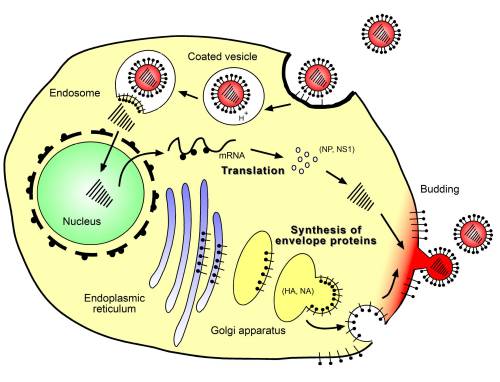
http://www.influenzareport.com/ir/images/image26.jpg

It is the low pH inside the endosomes (pH 5–6), maintained by proton pumps within the endosomal membrane, that triggers the fusion reaction between the viral envelope and the endosomal membrane. This is a key step in the viral infection mechanism. At low pH, a major conformational change in the HA spike is induced.

Once bound, influenza enters the host cell by endocytosis. The internalization of influenza virus is not a simple process and can be highly cell-type dependent. Viruses have been shown to enter cells by both clathrin-dependent and clathrin-independent endocytosis, as well as by macropinocytosis. Acidic environments of the endosome triggers conformational changes in HA that expose the fusion peptide, allowing for viral-endosomal fusion.[9] Exposure to low endosomal pH is also necessary for release of the individual viral ribonucleoproteins (vRNPs) from the Viruses matrix (M1) protein.

As it is with viral infections it is with cancer. The external pH of solid tumors is acidic as a consequence of increased metabolism of glucose and poor perfusion. Acid pH has been shown to stimulate tumor cell invasion and metastasis in vitro and in cells before tail vein injection in vivo.[10]

Drugs that increase intracellular pH (alkalinity within the cell) have been shown to decrease infectivity of pH-dependent viruses. However pharmaceutical  drugs that do this can provoke negative side effects. Sodium bicarbonate is the best way to increase pH in clinical emergency conditions and has been known as far back as the Spanish Flu pandemic of 1918 to save lives.

The proven value of Arm & Hammer Pure Bicarbonate of Soda as a therapeutic (healing) agent is further evinced by the following voluntary testimony of Edward R. Hays, M.D. , in his latter no the Church & Dwight Company:

In 1918 and 1919 while fighting the ‘Flu’ with the U.S. Public Health Service it was brought to my attention that rarely anyone who had been thoroughly alkalinized with Bicarbonate of Soda contracted the disease, and those who did contract it, if alkalinized early, would invariably have mild attacks. I have since that time treated all cases of “Cold,” Influenza and LaGripe by first giving generous doses of Bicarbonate of Soda, and in many, many instances within 36 hours the symptoms would have entirely abated.

Further, within my own household, before Woman’s Clubs and Parent-Teachers’ Associations, I have advocated the use of Bicarbonate of Soda as a preventive for “Colds,” with the result that now many reports are coming in stating that those who took “Soda” were not affected, while nearly everyone around them had the “Flu.”

“Besides doing good in respiratory affections, Bicarbonate of Soda is of inestimable value in the treatment of Alimentary Intoxication, Pyelitis (inflammation of the pelvis), Hyper-Acidity of urine, uric acid disturbance, rheumatism and burns. An occasional three-day course of Bicarbonate of Soda elimination increases the resisting power of the body to all Infectious Diseases.

Dr. Volney S. Cheney reported[11] that, “A number of cases of colds of varying severity were carefully studied in the laboratory. Observation was made as to the degree of acidity of the urine; the CO2, combining power of the blood as an indicator of the alkaline reserve; tests were also made to determine the calcium content of the blood, the sugar content; non-protein nitrogen and the basal metabolism. The urine invariably carried a higher degree of acidity than the normal-in some cases as high as 800 (normal 350); the CO2 combining power of the blood in all cases was low, the highest being 52 per cent; the sugar content of the blood was generally decreased (below 100 mg. per 100 c.c.); the metabolic rate was always on the minus side. (These cases were carefully selected because of their lack of any symptoms of disturbed thyroid activity.) There is a change in the blood chemistry and, consequently, there must be a change in the tissues supplied by the blood. There is a decrease in the bicarbonates or reserve bases contained in the blood plasma and the tissues. These findings seem to point the way to the conclusion that a cold is a disturbance of the alkaline balance or reserve, in other words, a mild acidosis, or perhaps better stated, a lessening of the “buffer” action of the blood plasma through a decrease in its bicarbonate content.”

Sodium bicarbonate is the important medicine because it gives more carbon dioxide to the body and especially the blood in the form of bicarbonates. Bicarbonate in the blood is easily turned into carbon dioxide (CO2) and the reverse is true in biochemical reactions that happen almost at the speed of light. The bottom line to what happens when one takes sodium bicarbonate orally is that it turns to CO2 in the stomach driving bicarbonates into the blood, which helps more blood and oxygen delivery to the cells.

After doing his experiments, Dr. Cheney reported: “I have been able to induce all the symptoms of a cold, in varying degree from a simple coryza to that of la grippe and the “flu,” by the induction of an artificial acidosis through the administration of ammonium and calcium chlorides. The degree of severity of the symptoms was in direct ratio to the degree of acidosis induced. In the more severe degree of acidosis, all the classical symptoms of the “flu” were present, even including a low degree of fever. The symptoms rapidly subsided upon the administration of sodium bicarbonate in large doses by mouth and by rectum.

Sodium Bicarbonate is one of the most flexible medicinals in terms of methods and modes of administration. It can be injected in emergency room situations, taken orally, nebulized, used transdermally as a lotion or paste, put in enemas and in larger quantities in therapeutic baths. Just dissolve it in water or when treating cancer it can also be mixed with Blackstrap Molasses, maple syrup, or a good honey as well as with lemon or mix with citric acid for use in baths or when making your own bath bombs.

There is no question that plasma bicarbonate concentrations are shown to increase after oral ingestion. The most important effect of bicarbonate ingestion is the change in acid-base balance in biological fluids. In Europe, spa-goers drink bicarbonate-rich water to heal ulcers, colitis and other gastric disorders. Ingesting bicarbonate by way of bathing stimulates circulation, possibly benefiting those with high blood pressure and moderate atherosclerosis. It would be highly negligent to exclude it from Ebola treatments.

Increases of Carbon Dioxide and Bicarbonates Lead to Increased Oxygen

The most important factor in creating proper pH is increasing oxygen because no wastes or toxins can leave the body without first combining. with oxygen. The more alkaline you are, the more oxygen your fluids can hold and keep. Oxygen also buffers/oxidizes metabolic waste acids helping to keep you more alkaline. “The Secret of Life is both to feed and nourish the cells and let them flush their waste and toxins”, according to Dr. Alexis Carrell, Nobel Prize recipient in 1912. Dr. Otto Warburg, also a Nobel Prize recipient, in 1931 & 1944, said, “If our internal environment was changed from an acidic oxygen deprived environment to an alkaline environment full of oxygen, viruses, bacteria and fungus cannot live.”

The position of the oxygen disassociation curve (ODC) is influenced directly by pH, core body temperature and carbon dioxide pressure. According to Warburg, it is the increased amounts of carcinogens, toxicity and pollution that cause cells to be unable to uptake oxygen efficiently. This is connected with over-acidity, which itself is created principally under low oxygen conditions.

According to Annelie Pompe, a prominent mountaineer and world-champion free diver, alkaline tissues can hold up to 20 times more oxygen than acidic ones. When our body cells and tissues are acidic (below pH of 6.5-7.0), they lose their ability to exchange oxygen, and cancer cells love that.

Special Note: This is not the only way to skin the cat (virus). Directly supporting the immune system through a number of natural means and replenishing Vitamin C faster than Ebola strips it from the body creating lightening Scurvy and massive hemorrhage is another. Hitting the body hard with Glutathione and selenium is yet another potent and intelligent avenue of treatment that is not being pursued by the western medical establishment that prefers to complain that there is no treatment.

Original Article:

ChooseLife Notes : Dr Sirius supports the Sodium Bicarb path towards lower acidity (or higher pH). Moreless used to support this method also, but moved on to Calcium and Magnesium as focal points due to the potential dangers to the heart, so I am merely highlighting the data, rather than promoting any background theory, supplements, or diet.

Advances in Nutritional Research on Regulatory T-Cells

Abstract

Many clinical and animal studies have shown that certain dietary components exert anti-inflammatory properties that aid in the amelioration of chronic inflammatory diseases. Among the various proposed channels through which dietary components affect immune responses, regulatory T-cells (Tregs) are emerging as key targets for the dietary prevention of chronic inflammatory diseases. In this review, immunoregulation by Tregs is briefly described, followed by a summary of recent advances and possible applications of techniques for the study of Tregs. In addition, this review provides an overview of the current knowledge on Treg regulation by certain dietary components, including vitamins, omega-3 polyunsaturated fatty acids, and polyphenols. The caveats of previous studies are also discussed in order to highlight the distinctions between dietary studies and immunological approaches. Consequently, this review may help to clarify the means by which nutritional components influence Tregs.

Keywords: nutrition, immunology, regulatory T-cells, Tregs, anti-inflammatory

4. Dietary Regulation of Tregs

4.1. Vitamins

Following dietary consumption and absorption in the intestines, water-insoluble vitamin A (all-trans-retinol) is carried by cellular retinol binding protein (CRBP) in an aqueous environment to be transported into the cytoplasm. Subsequently, retinol is oxidized to retinal by retinol dehydrogenase, and then retinal is further oxidized to retinoic acid by retinal dehydrogenase [25]. With respect to the role of vitamin A in the development of Tregs, Bai et al. [26] demonstrated that the population of Tregs derived from biopsies of ulcerative colitis patients increases following ex vivo culture in the presence of retinoic acid, a potent metabolite of vitamin A. In the same study, using a chemical (2,4,6-trinitrobenzene sulfonic acid, TNBS)-induced murine colitis model, it was further elucidated that dietary vitamin A ameliorated colitis, which is accompanied by an increased population of Tregs. Wu et al. [27] further reported that intraperitoneal administration of all-trans retinoic acid aided in the attenuation of airway inflammation by inducing Treg development in a model of experimental allergic asthma. Moreover, a dietary study demonstrated that retinal intervention in mice upregulated Tregs, which further assisted in the treatment of autoimmune inflammatory disorders, including rheumatoid arthritis [28]. Overall, these animal studies indicate that vitamin A and its metabolites affect populations of Tregs, thereby suppressing chronic inflammatory diseases. However, it remains unclear whether vitamin A affects Tregs directly, indirectly, or both. Indeed, Chang et al. demonstrated that dendritic cells also promote the generation of Tregs in response to retinoic acid, at least in vitro [29], exemplifying that in vivo models are more complicated for elucidating the mechanism of action of dietary components.

With respect to water-soluble vitamins, Kunisawa et al. [30] showed that Tregs express high levels of vitamin B9 (folic acid) receptor on their cell surfaces. Furthermore, vitamin B9 was demonstrated to be a survival factor for Tregs; in a vitamin B9-deficient culture, naïve CD4+ T-cells successfully differentiated into Foxp3+ Tregs but failed to survive. Moreover, it was found that mice fed a vitamin B9-deficient diet exhibited a decreased number of Tregs in the small intestine, where vitamin B9 is absorbed.

4.2. Dietary Fatty Acids

A significant quantity of data has indicated that dietary omega-3 polyunsaturated fatty acids (PUFA) may prevent or ameliorate chronic inflammatory diseases, including inflammatory bowel diseases [31,32,33,34]. These studies have identified multiple anti-inflammatory mechanisms of omega-3 PUFA: cytokine production, antagonism to omega-6 PUFA metabolism, binding to nuclear receptors as ligands, the alteration of signaling protein acylation, and the modulation of signaling platform lipid rafts in various immune cell models. With respect to CD4+ T-cell mediated inflammatory responses, several studies using dietary intervention with either purified omega-3 PUFA or fish oil (which is rich in omega-3 PUFA) demonstrated that CD4+ T-cell functions, as assessed by cytokine production and proliferation, were suppressed in both humans [35,36,37] and experimental animals [38,39].

As for the effect of omega-3 PUFA on Tregs, it was shown that the omega-3 PUFA abundant in fermented fish oil enhanced the development of Foxp3+ Tregs in vivo [40]. Moreover, intraperitoneal injection of eicosapentaenoic acid (EPA), an omega-3 PUFA, resulted in prolongation of graft survival in a murine transplant model, accompanied by an increased population of Tregs [41]. However, those studies do not conclusively demonstrate a direct function of omega-3 PUFA on the differentiation and/or function of Tregs, given the caveat that in vivo administration of omega-3 PUFA can affect diverse types of accessory cells. Indeed, it was found that dendritic cells cultured in docosahexaenoic acid (DHA, an omega-3 PUFA)-rich conditions facilitated the development of Tregs, at least in vitro [42], indicating an indirect modulation of Treg development by omega-3 PUFA. However, despite the increase in the development of Tregs, the favorable effect of omega-3 PUFA on Tregs is still controversial because it has also been observed that DHA inhibited the suppressive effect of Tregs on effector T-cell proliferations in a dose-dependent manner in vitro [43].

4.3. Dietary Polyphenols

Dietary polyphenols are well known for their antioxidant properties, which can further suppress inflammatory responses by reducing nitric oxide. In addition to their archetypal antioxidant capacities, immunoregulatory effects of select polyphenols on Tregs have been characterized as follows. Wang et al. [44] reported that ex vivo development of CD4+ Foxp3+ Tregs was induced in the presence of the flavonoid naringenin in part via activation of the aryl hydrocarbon receptor, a transcription factor. As well, increased Treg differentiation suppressed the proliferation of effector T-cells. In addition, dietary naringenin was found to suppress cholesterol-induced systemic inflammation, metabolic dysregulation, atherosclerosis, and allergen-induced airway inflammation [45,46], although it was not clear whether those inhibitory effects were Treg-dependent. In a mouse model of T-cell mediated inflammatory disease of the central nervous system, dietary intake of epigallocatechin gallate (EGCG), a catechin derivative, exerted a favorable effect, in part by increasing the Treg population in the spinal cord [47]. Furthermore, fermented grape marc (FGM) was found to promote Treg differentiation of human CD4+ T-cells [48].Go to:

5. Conclusions

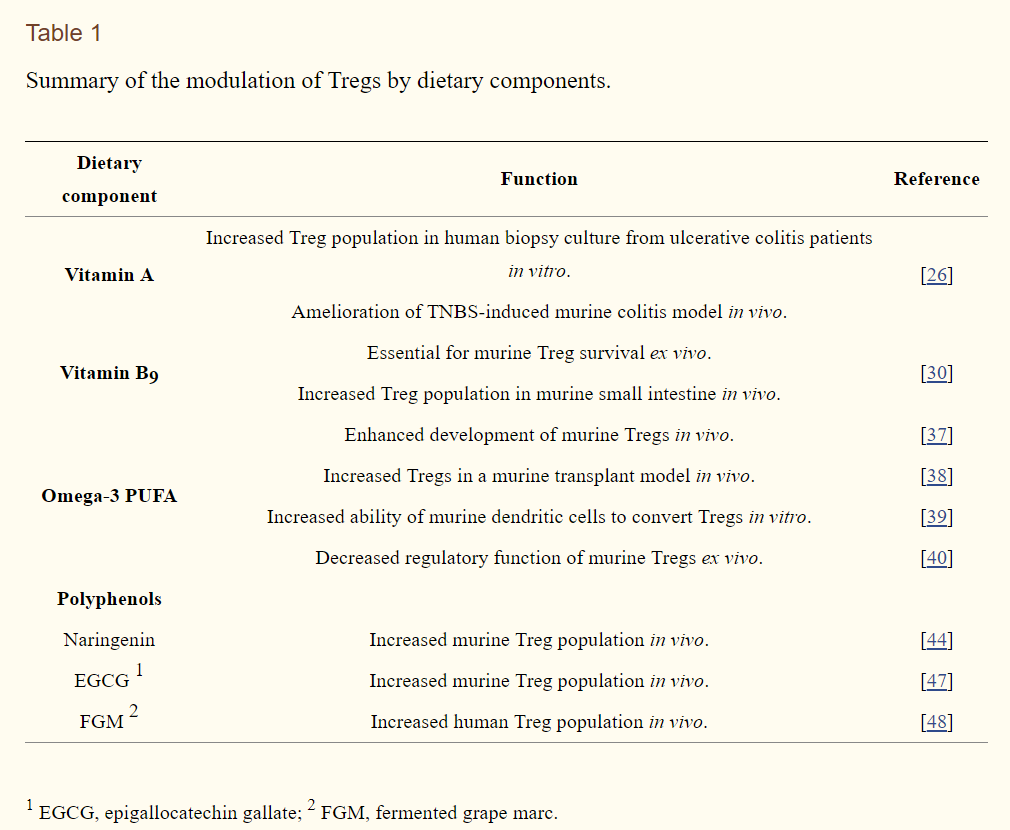
Due to the relatively short history of studies on Tregs, investigations of the direct effects of a variety of dietary components on Treg conversion are limited at present (summarized in Table 1 and previously reviewed elsewhere [49]). It seems that a majority of the anti-inflammatory functional studies have been conducted in vivo by observing physiological outcomes, such as symptoms of chronic inflammation and accumulation of certain immune cell types. Even though in vivo studies are indispensable for nutritional studies, simpler model systems must be developed to dissect the detailed mechanisms by which dietary components regulate physiological systems. Therefore, further studies using more sophisticated and appropriate in vivo model systems are needed to draw solid conclusions. In this regard, as introduced in this review, the protocol for Treg differentiation from naïve CD4+ T cells could be effectively utilized to determine the direct effects of a variety of promising dietary Treg modulators present in foods.

https://www.ncbi.nlm.nih.gov/pmc/articles/PMC3847731/

Published: October 28th 2013

Total Harmony Of Mankind – Donald-Gene Kraus

“He furthered his education under Biochemist/Physicist Dr. Carey Reams; Herbalist Dr. John R. Christopher; and Iridologist Dr. Bernard Jenson from 1974-1978.”

The Concept Of Sticky Foods

Question: You talked about yeasty foods, the breads, the cheeses and the milk forming mucous; I do not quite understand that concept. It does not form mucous in itself… does not the peristaltic action get it out of the system?

No, we are talking about a mucous that is formed from foods that feed yeast when food stays too long in the body. When foods or liquids are sticky (starches, grains and meats), they do not have enough lubrication, so they do not get through the system quick enough; and if you do not have enough oxygen in your reserve bank account, these unfriendly critters come in, eat it, and form the bad mucous bacteria.

Question: Yeast is just a sticky substance, eventually your body gets rid of it does not it; or you eliminate it?

No, not if you do not have enough oxygen or lubrication (mucus membranes that produce lubricant). Will become a hard mass attaching itself to the intestinal tract.

Excerpts from : Total Harmony.pdf

More from this Author : Not Eating The Right Fats

Extracellular Brain pH and Outcome following Severe Traumatic Brain Injury.

Gupta AK, et al.

Abstract

The ability to measure brain tissue chemistry has led to valuable information regarding pathophysiological changes in patients with traumatic brain injury (TBI). Over the last few years, the focus has been on monitoring changes in brain tissue oxygen to determine thresholds of ischemia that affect outcome. However, the variability of this measurement suggests that it may not be a robust method. We have therefore investigated the relationship of brain tissue pH (pH(b)) and outcome in patients with TBI. We retrospectively analyzed prospectively collected data of 38 patients admitted to the Neurosciences Critical Care Unit with TBI between 1998 and 2003, and who had a multiparameter tissue gas sensor inserted into the brain. All patients were managed using an evidence-based protocol targeting CPP > 70 mm Hg. Physiological variables were averaged over 4 min and analyzed using a generalized least squares random effects model to determine the temporal profile of pH(b) and its association with outcome. Median (IQR) minimum pH(b) was 7.00 (6.89, 7.08), median (IQR) maximum pH(b) was 7.25 (7.18, 7.33), and median (IQR) patient averaged pH(b) was 7.13 (7.07, 7.17). pH(b) was significantly lower in those who did not survive their hospital stay compared to those that survived. In addition, those with unfavorable neurological outcome had lower pH(b) values than those with favorable neurological outcome. pH(b) differentiated between survivors and non-survivors. Measurement of pH(b) may be a useful indicator of outcome in patients with TBI.

PMID 15253796 [Indexed for MEDLINE]

Source = https://www.ncbi.nlm.nih.gov/m/pubmed/15253796/

Glyphosate based- herbicide exposure affects gut microbiota, anxiety and depression-like behaviors in mice.

Authors

Aitbali Y1Ba-M’hamed S1Elhidar N2Nafis A2Soraa N3Bennis M4.

Abstract

Recently, a number of studies have demonstrated the profound relationship between gut microbiota (GM) alterations and behavioral changes. Glyphosate-based herbicides (GBH) have been shown to induce behavioral impairments, and it is possible that they mediate the effects through an altered GM. In this study, we investigated the toxic effects of GBH on GM and its subsequent effects on the neurobehavioral functions in mice following acute, subchronic and chronic exposure to 250 or 500 mg/kg/day.

The effect of these acute and repeated treatments was assessed at the behavioural level using the open field, the elevated plus maze, the tail suspension and splash tests. Then, mice were sacrificed and the intestinal samples were collected for GM analysis.

Subchronic and chronic exposure to GBH induced an increase of anxiety and depression-like behaviors.

In addition, GBH significantly altered the GM composition in terms of relative abundance and phylogenic diversity of the key microbes. Indeed, it decreased more specifically, Corynebacterium, Firmicutes, Bacteroidetes and Lactobacillus in treated mice.

These data reinforce the essential link between GM and GBH toxicity in mice and suggest that observed intestinal dysbiosis could increase the prevalence of neurobehavioral alterations.

Copyright © 2018 Elsevier Inc. All rights reserved.

Original link – here

Low brain pH may play a role in autism, other conditions


This article also appeared in the 2017, volume 3 issue of ARI’s Autism Research Review International newsletter.

Autism spectrum disorders (ASD) and psychiatric conditions such as schizophrenia and bipolar disorder may involve an acid/ alkaline imbalance in the brain, according to a new study.

Hideo Hagihara and colleagues say that low brain pH (indicating greater acidity) has been reported in postmortem studies of individuals with bipolar disorder, schizophrenia, and ASD. However, they say, this was believed to be an artifact caused by secondary factors such as antipsychotic use.

To determine whether low brain pH might instead be a primary feature of a number of psychiatric disorders, the researchers first conducted a meta-analysis of datasets from ten postmortem studies of individuals with bipolar disorder or schizophrenia. They found that both groups of patients had low brain pH levels, even when the researchers factored in variables such as age at death, postmortem interval, and history of antipsychotic use.

Next, the researchers investigated brain pH levels using five mouse models of psychiatric disorders including schizophrenia, bipolar disorder, and ASD. In all five models, brain pH was significantly lower than in controls. In addition, the researchers detected elevated levels of lactate in the brains of the mice and found that the higher the lactate was, the lower the pH level was. They note that the increase in lactate may explain the decreased brain pH levels, because lactate acts as a strong acid.

The researchers comment that “brain acidosis influences a number of brain functions, such as anxiety, mood, and cognition.” In addition, they say, acidosis may affect the structure and function of several types of brain cells including GABAergic neurons and oligodendrocytes. “Alterations in these types of cells have been well-documented in the brains of patients with schizophrenia, bipolar disorder, and ASD,” they say, “and may underlie some of the cognitive deficits associated with these disorders.”

The researchers say that based on the assumption that low brain pH is an artifact, researchers have typically attempted to match postmortem samples based on tissue pH. In the process, they say, they may have obscured pathological features associated with changes in pH, such as neuronal hyper-excitation and inflammation.

“Decreased brain pH as a shared endophenotype of psychiatric disorders,” Hideo Hagihara, Vibeke S. Catts, Yuta Katayama, Hirotaka Shoji, Tsuyoshi Takagi, Freesia L. Huang, Akito Nakao, Yasuo Mori, Kuo-Ping Huang, Shunsuke Ishii, Isabella A. Graef, Keiichi I. Nakayama, Cynthia Shannon Weickert, and Tsuyoshi Miyakawa, Neuropsychopharmacology, August 4, 2017 (epub prior to print publication). Address: Tsuyoshi Miyakawa, Division of Systems Medical Science, Institute for Comprehensive Medical Science, Fujita Health University, Kutsukake-cho, Toyoake, Aichi 470-1192, Japan, miyakawa@fujita-hu.ac.jp.

—and—

“Increased brain acidity in psychiatric disorders,” news release, Fujita Health University, August 7, 2017.127118310

https://www.autism.com/low_ph

Declining Life Expectancy? what’s the deal?

Today I see an article in the British Medical Journal :

Study cites austerity as factor in stalling of life expectancy in rich countries

Progress made through the 20th century in adding years to life is now stalling and, in some countries, going into reverse, finds research carried out by Scotland’s Public Health Observatory. It looked at trends in life expectancy across 24 high income countries over periods of five years from 1992 to 2016.1 The stalling was evident in several countries across western Europe and North America.

The research report cites austerity measures introduced in many of the world’s richest countries after the 2008 economic recession as one of the possible causes of a slowing improvement in life …View Full Text

ChooseLife : This may have some truth in it, however much more compelling to me is the ‘top of the hill’ theory, which suggests that there is a generational lag in rates, such as life expectancy, and healthy life expectancy.

This data confounds the supposition in the BMJ: Okinawa also has the highest prevalence of centenarians in Japan despite long-standing socioeconomic disadvantages relative to other Japanese (Cockerham et al. 2000)

Why might this generational lag be of profound importance? Recorded levels of nutrients have dropped significantly during the past 100 years. During times of war (in particular) the focus shifted from quality of produce, to volume of produce. Sadly, after the wars ended this trend reversal was not quashed, leading to a long term drop in nutrient density, the rise of the supermarket only served to compound this problem, demands for low price high volumes cheats the next generation of mineral density, and, brings with it a multitude of ailments and consequences to health and vitality.

Dirt Poor: Have Fruits and Vegetables Become Less Nutritious?

Because of soil depletion, crops grown decades ago were much richer in vitamins and minerals than the varieties most of us get today

Dear EarthTalk: What’s the nutritional difference between the carrot I ate in 1970 and one I eat today? I’ve heard that that there’s very little nutrition left. Is that true?—Esther G., Newark, N.J.

It would be overkill to say that the carrot you eat today has very little nutrition in it—especially compared to some of the other less healthy foods you likely also eat—but it is true that fruits and vegetables grown decades ago were much richer in vitamins and minerals than the varieties most of us get today. The main culprit in this disturbing nutritional trend is soil depletion: Modern intensive agricultural methods have stripped increasing amounts of nutrients from the soil in which the food we eat grows. Sadly, each successive generation of fast-growing, pest-resistant carrot is truly less good for you than the one before.

A landmark study on the topic by Donald Davis and his team of researchers from the University of Texas (UT) at Austin’s Department of Chemistry and Biochemistry was published in December 2004 in the Journal of the American College of Nutrition. They studied U.S. Department of Agriculture nutritional data from both 1950 and 1999 for 43 different vegetables and fruits, finding “reliable declines” in the amount of protein, calcium, phosphorus, iron, riboflavin (vitamin B2) and vitamin C over the past half century. Davis and his colleagues chalk up this declining nutritional content to the preponderance of agricultural practices designed to improve traits (size, growth rate, pest resistance) other than nutrition.

“Efforts to breed new varieties of crops that provide greater yield, pest resistance and climate adaptability have allowed crops to grow bigger and more rapidly,” reported Davis, “but their ability to manufacture or uptake nutrients has not kept pace with their rapid growth.” There have likely been declines in other nutrients, too, he said, such as magnesium, zinc and vitamins B-6 and E, but they were not studied in 1950 and more research is needed to find out how much less we are getting of these key vitamins and minerals.

The Organic Consumers Association cites several other studies with similar findings: A Kushi Institute analysis of nutrient data from 1975 to 1997 found that average calcium levels in 12 fresh vegetables dropped 27 percent; iron levels 37 percent; vitamin A levels 21 percent, and vitamin C levels 30 percent. A similar study of British nutrient data from 1930 to 1980, published in the British Food Journal,found that in 20 vegetables the average calcium content had declined 19 percent; iron 22 percent; and potassium 14 percent. Yet another study concluded that one would have to eat eight oranges today to derive the same amount of Vitamin A as our grandparents would have gotten from one.

What can be done? The key to healthier produce is healthier soil. Alternating fields between growing seasons to give land time to restore would be one important step. Also, foregoing pesticides and fertilizers in favor of organic growing methods is good for the soil, the produce and its consumers. Those who want to get the most nutritious fruits and vegetables should buy regularly from local organic farmers.

UT’s Davis warns that just because fruits and vegetables aren’t as healthy as they used to be doesn’t mean we should avoid them. “Vegetables are extraordinarily rich in nutrients and beneficial phytochemicals,” he reported. “They are still there, and vegetables and fruits are our best sources for these.”

Source : https://www.scientificamerican.com/article/soil-depletion-and-nutrition-loss/

ChooseLife : These falling rates must be seen in the context of when we are growing, those who are in their 90’s now, were nurtured on soils before World War II, in the 1920’s and 1930’s, as their bodies grew, there was much greater nutrient density to grow nutrient dense bodies to carry them through later life. With each period of decline, we see rises in diseases related to lack of key nutrients, such as Calcium and Magnesium and exploding Osteoporosis.

Given the parallel increase in mineral striped fast foods, especially white flour and sugar (white sugar is antagonistic to Calcium as is well known, for example), it is no surprise to hear reports of Okinawan Centennials outliving their grandchildren who have adopted ‘Western Diets’.

Is obesity really a condition based in Nutrient craving?

Note : These are the actual food measurements of the Centenarians in Okinawa

Related research, showing how Calcium intake during key growth phases may be profoundly important to health lifespans :

Calcium supplementation increases stature and bone mineral mass of 16- to 18-year-old boys.

Abstract

The effect of calcium carbonate supplementation on bone growth and mineral accretion was studied in 143 boys aged 16-18 yr, randomized to 1000 mg Ca/d or a matching placebo for 13 months. Anthropometry and dual-energy x-ray absorptiometry of the whole body, lumbar spine, hip, and forearm were performed before, during, and after the intervention. The intervention resulted in greater bone mineral content (BMC) of the whole body (+1.3%, P = 0.02), lumbar spine (+2.5%, P = 0.004), and hip (total +2.3%, P = 0.01; neck +2.4%, P = 0.02; intertrochanter +2.7%, P = 0.01). This was associated with greater height (+0.4%, P = 0.0004, equivalent to 7 mm), lean mass (+1.3%, P = 0.02), and lumbar spine bone area (+1.5%, P = 0.003). The increases in BMC diminished after size adjustment, suggesting that the intervention effect was mediated through an effect on growth. The BMC response at the intertrochanter was greater in subjects with high physical activity (+4.4%, P = 0.05). There were no other significant interactions with physical activity, plasma testosterone, calcium intake, or tablet compliance. We conclude that calcium carbonate supplementation of adolescent boys increased skeletal growth, resulting in greater stature and bone mineral acquisition. Follow-up studies will determine whether this reflects a change in the tempo of growth or an effect on skeletal size that persists into adulthood.

Calcium supplementation and bone mineral accretion in Chinese adolescents aged 12-14 years: a 12-month, dose-response, randomised intervention trial.

Abstract

A 12-month, dose-response, randomised, intervention trial was conducted to determine adequate Ca intake levels for Chinese adolescents by investigating the effect of Ca supplementation on bone mineral accretion. A total of 220 Han adolescents (111 girls and 109 boys) aged 12-14 years were recruited. All subjects were randomly divided into three groups. The bone mineral content (BMC) and bone mineral density (BMD) of the whole body, lumbar spine (L1-L4), left hip and femoral neck were measured by dual-energy X-ray absorptiometry. Girls in the high-Ca group (actual Ca intake: 1243 (sd 193) mg/d) exhibited greater increases in the femoral neck BMC compared with those in the low-Ca group (9·7 v. 6·4 %, P =0·04) over the 1-year intervention period. The increases in femoral neck BMC were greater in boys in the high-Ca and medium-Ca groups (actual Ca intake: 985 (sd 168) mg/d) than in those in the low-Ca group (15·7 v. 11·7 %, P =0·03; 15·8 v. 11·7 %, P =0·03). Ca supplementation had significant effects on the whole-body BMC and BMD in subjects with physical activity levels>34·86 metabolic equivalents and on the spine BMD and BMC and BMD of most sites in subjects with Tanner stage < 3. Increasing Ca intake levels with Ca supplementation enhanced femoral neck mineral acquisition in Chinese adolescents. Furthermore, high physical activity levels and low Tanner stage appeared to significantly contribute to the effect of Ca supplementation on bone mass. Whether this is a lasting beneficial effect leading to the optimisation of peak bone mass needs to be determined in other long-term prospective studies.

Dietary Survey of Centennials : https://www.jstage.jst.go.jp/article/jnsv1973/42/3/42_3_241/_pdf

To be continued… Charles Northern, Western Price and Carey Reams.